Fall River, Massachusetts · The Casavant Opus 2793
The Saint Anne's Organ
Preserving the voice of Saint Anne's Church
For generations, the great pipe organ of Saint Anne's Church filled one of Fall River's most recognizable sacred spaces with music. When the church faced permanent closure, a meticulous preservation project began: capture the instrument note by note, preserve the room around it, restore what time had silenced, and build a playable digital version so its voice could continue.
4,518pipes documented in the original project notes
48 kHz / 32-bitrecording format described for the sampling sessions
A440target tuning used during digital restoration
Opus 2793Casavant organ at Saint Anne's Church
An instrument remembered in sound
More than pipes and wind
Saint Anne's organ belonged to the daily life of the church. The preservation project was created to keep that voice from disappearing when the building's future changed.
The instrument
A soundtrack to generations
The organ accompanied weddings, funerals, baptisms, Masses and countless personal moments inside Saint Anne's Church. Its significance was not simply mechanical or musical; its sound became tied to the memory of the building itself.
The preservation
Recorded note by note
Each key across the instrument's stops was recorded individually. Microphone placement was chosen not only to capture the pipes, but also the natural resonance of the church. The resulting library preserved both an instrument and something of the acoustic character surrounding it.
The restoration
Cleaning, tuning and rebuilding
The recordings were cut into individual files, cataloged, cleaned to reduce unwanted noise and tuned for reliable playback. Notes that could no longer sound properly on the physical instrument were reconstructed digitally from neighboring material so the virtual scale could remain complete.
The virtual organ
A playable digital instrument
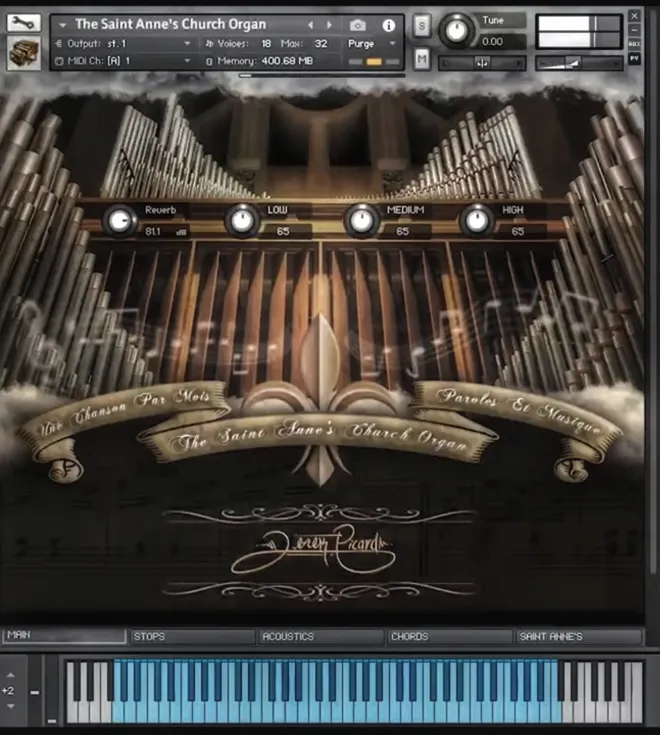
The finished sample library was assembled into a virtual instrument designed to respond like the original organ through a customized MIDI setup. The preserved Saint Anne's sounds could then be combined with orchestral, choral and other sampled instruments for new performances.
Watch · Listen · Experience
The preservation in motion
This original project film explains the process of recording and rebuilding the instrument digitally. Also, check out the Spotify collection to hear it in action.
The chronology
From sanctuary to digital archive
1960s
A Casavant voice at Saint Anne's
Casavant Opus 2793 becomes part of the musical life of Saint Anne's Church in Fall River.
2018
Preservation begins
With the church facing closure, permission is obtained to document and record the organ.
2018–2019
Sampling and digital restoration
The organ is captured key by key, edited, cleaned, tuned and assembled into a virtual instrument.
2019
The story reaches the public
The project is featured in local media and a commemorative album presents performances using the preserved organ.
Today
A living digital archive
This website is being rebuilt as a permanent home for the instrument's history, recordings, photographs and preservation story.
Photographic archive
Inside the preservation project
Explore the archive photograph by photograph. Swipe on a phone or tablet, or use the controls to move through the collection.
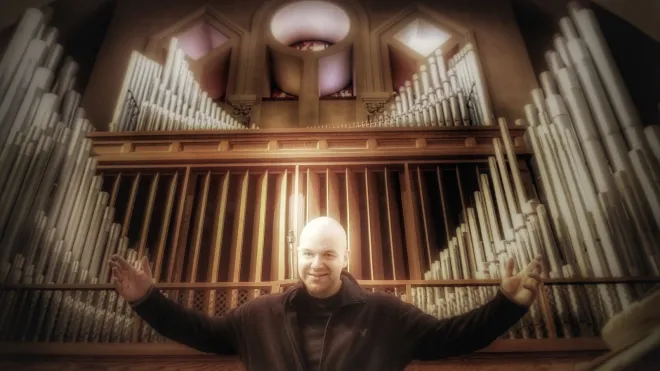
The organ and its pipework during the preservation era.
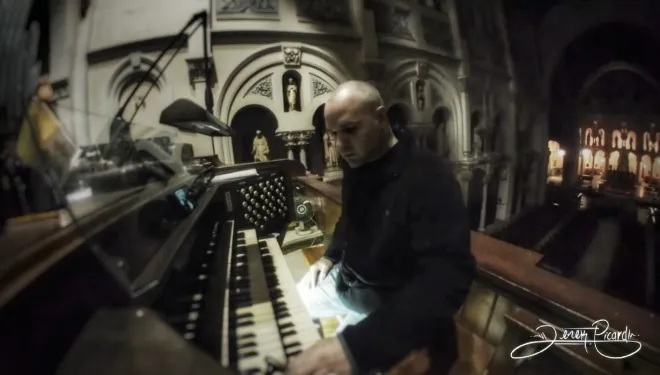
At the console during the recording project.
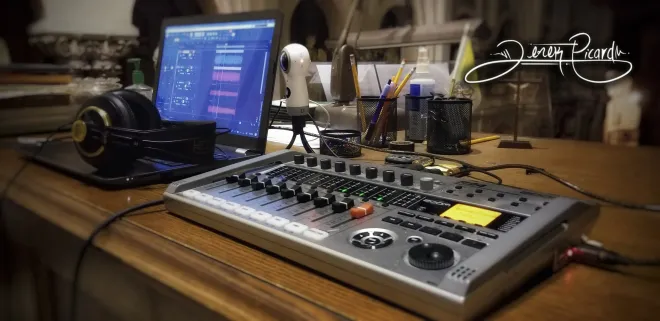
Recording equipment used during the sampling sessions.
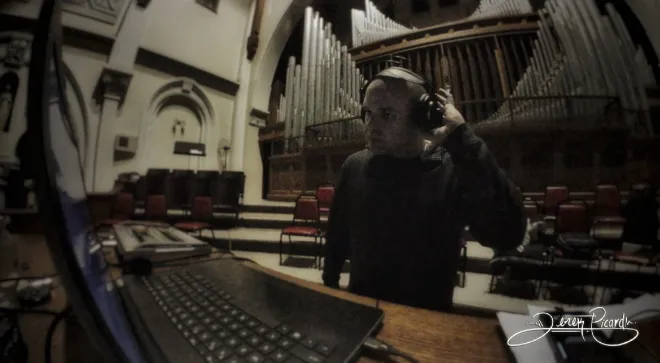
Monitoring the instrument during recording.
The custom virtual-instrument interface.
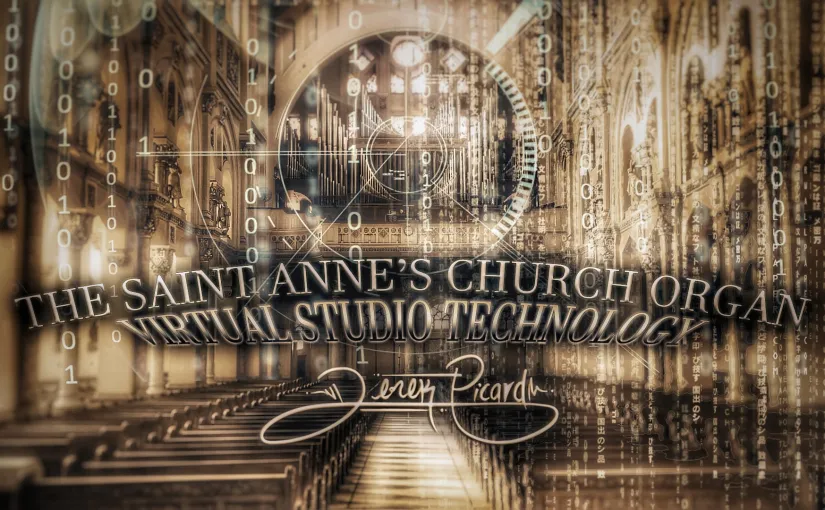
Artwork created around the virtual studio project.
Swipe to explore ↔
Stories & research
The permanent archive
Stories, discoveries and research about the art, science and future of recorded sound can be found here.
Pipes of Saint Anne’s: Preserving a Voice That Could Have Been Lost
By Derek Picard
When Saint Anne’s Church in Fall River, Massachusetts was preparing to close, one of its most recognizable voices faced an uncertain future: the magnificent Casavant Opus 2793 pipe organ. With 4,518 pipes and more than half a century of memories behind it, I set out to preserve its sound—not simply as a recording, but as a fully playable virtual instrument. What followed was an extraordinary process of recording, restoration, reconstruction and preservation, one note and one pipe at a time.
Read story
For more than half a century, the magnificent Casavant Opus 2793 pipe organ at Saint Anne’s Church provided the soundtrack to countless weddings, funerals, baptisms, holidays and Sunday Masses in Fall River, Massachusetts.
Its sound also became part of many of my own memories.
When I learned that Saint Anne’s Church was preparing to permanently close, I wanted to find a way to preserve more than photographs and recordings of the organ. I wanted to preserve its actual voice.
With permission from the Diocese of Fall River, I began an ambitious sampling project. The individual sounds of the organ were recorded using professional microphones and recording equipment, carefully capturing not only the pipes themselves but also the remarkable natural acoustics of Saint Anne’s.
The work continued long after the microphones were packed away. Thousands of recordings had to be separated, cataloged, cleaned and tuned. Even pipes that were no longer functioning presented an unusual challenge, requiring their missing notes to be carefully reconstructed so the completed virtual instrument could once again possess an uninterrupted musical scale.
Eventually, all of that work resulted in something I had only imagined when the project began:
The Saint Anne’s Church Organ could be played again as a virtual instrument.
Today, the preservation project provides a fascinating look at how traditional pipe-organ craftsmanship and modern recording technology came together to preserve a small piece of Saint Anne’s history.
The complete Pipes of Saint Anne’s presentation includes photographs from the recording sessions, the equipment and software used, the story behind restoring the organ’s missing “dead notes,” the customized Kontakt virtual instrument, commemorative music project, newspaper coverage, and a documentary explaining the process.
There is much more to the story than can be told here.
Explore the complete [Pipes of Saint Anne's ](https://stannesorgan.com/pages/Pipes_of_St_Annes/) project, see the photographs, and discover how the organ was preserved.
What began as an attempt to save the sound of an extraordinary instrument ultimately became a way of preserving something much more personal—a voice that had accompanied generations of memories inside Saint Anne’s Church.
And now, that voice can continue to be heard.
The New Frontier of Sampling: How Real Sounds Become Virtual Instruments
By Derek Picard
From 32-bit float capture and immersive microphones to Kontakt 8, granular processing and hybrid instruments, sampling technology is changing how acoustic sounds are preserved and transformed.
Read story
Sampling has moved far beyond the idea of simply recording one note and mapping it across a keyboard. In 2026, the frontier is about capturing an acoustic instrument as a living system: its attacks, releases, mechanical sounds, dynamic layers, room reflections, performance variations and spatial character — then giving a software instrument enough intelligence to recombine those details convincingly in real time.
Modern sampler platforms are increasingly blending traditional multisampling with creative transformation. Native Instruments' Kontakt 8, for example, combines its established sample-instrument architecture with newer tools such as Leap and Conflux, encouraging developers to treat recorded audio both as faithful source material and as raw material for new instruments. This reflects a broader trend: the boundary between a sampled acoustic instrument and a designed electronic instrument is becoming less distinct.
The capture side has also changed dramatically. 32-bit float field recorders now give sampling engineers extraordinary practical headroom. Recorders from companies such as Sound Devices and Zoom can preserve very quiet detail and unexpectedly loud transients in the same session with far less risk of permanently clipping the recording. For sampling work, where a session may include everything from the faint click of a key mechanism to the full impact of an organ, piano, percussion instrument or resonant object, that flexibility can be extremely valuable. High sample-rate recording — commonly extending to 96 kHz or 192 kHz on professional recorders — also gives sound designers more freedom when recordings will later be slowed, stretched or radically transformed.
Microphone technique is becoming more spatial as well. Traditional close microphones remain essential because they capture detail and consistency, but engineers can now combine them with room pairs, omnidirectional microphones, Mid-Side arrays and immersive systems. Neumann's KU 100 binaural head is a striking example: it captures a three-dimensional image intended to reproduce the spatial cues of human hearing. A sampling session can therefore preserve not only what an instrument sounds like, but where it appears to exist in a room. For a pipe organ, church bell, choir, percussion ensemble or other instrument inseparable from its acoustic environment, this can turn the room itself into part of the virtual instrument.
Microphone choice remains highly specific to the source. Small-diaphragm condensers are prized for fast transient response and consistent off-axis behavior, while large-diaphragm condensers are often chosen when a larger, richer presentation is wanted. Multi-pattern microphones add another layer of flexibility because the same position can be explored in cardioid, omnidirectional or figure-eight configurations. The most interesting sampling rigs increasingly use several perspectives at once: close microphones for definition, a stereo pair for width, distant microphones for natural reverberation, and sometimes binaural or immersive microphones for spatial realism.
Unique sampling techniques are also expanding what counts as an instrument. Developers routinely record prepared pianos, bowed metal, struck architectural objects, resonant wood, mechanical devices, found objects, environmental ambiences and noises that were never designed to be musical. Those recordings can be sliced into tiny grains, layered, reversed, time-stretched, pitch-shifted or crossfaded into entirely new timbres. Granular processing is especially powerful because it can break a recording into microscopic fragments and reorganize them into pads, textures and evolving atmospheres while retaining a recognizable fingerprint of the original sound.
This is where sampling and sound design now meet. A single acoustic recording can have several lives: one layer may remain natural, another may be stretched into an ambient bed, another converted into a percussive transient, and another processed into a sustained harmonic texture. When these layers respond to velocity, controllers, round-robin variation and performance scripting, the result can behave less like playback and more like an instrument in its own right.
Some of today's most fascinating virtual instruments are therefore hybrids. They begin with meticulously sampled pianos, strings, winds, percussion or unusual acoustic sources, but combine those recordings with synthesis, modulation, sequencing and spectral or granular manipulation. The goal is no longer always perfect imitation. Increasingly, the goal is to preserve the identity of a real sound while giving musicians access to possibilities the original physical object could never produce.
For preservation projects such as The Saint Anne's Organ, these advances are especially meaningful. A detailed sample archive can serve two purposes at once: it can document an irreplaceable acoustic instrument with increasing fidelity, and it can become the foundation for a playable digital instrument capable of introducing that sound to musicians who may never stand in the original building. Better converters, greater recording headroom, sophisticated microphone arrays, spatial capture and increasingly powerful sampler engines all push the same idea forward — a recorded sound does not have to be the end of a performance. It can become the beginning of a new instrument.
Pipes of Saint Anne's
By Derek Picard
The original account of sampling, restoring and rebuilding the Saint Anne's Church organ as a playable virtual instrument.
Read story
The Saint Anne's Church organ was preserved through an unusually detailed recording process. Every playable note was captured individually, the recordings were organized by stop, cleaned and tuned, and nonfunctional notes were recreated digitally when needed. The project ultimately became a virtual instrument capable of carrying the organ's sound into future performances.
Join Us!
Receive occasional updates as photographs, recordings and historical material are added.